§ 04 / Gallery
Renders + assembly.
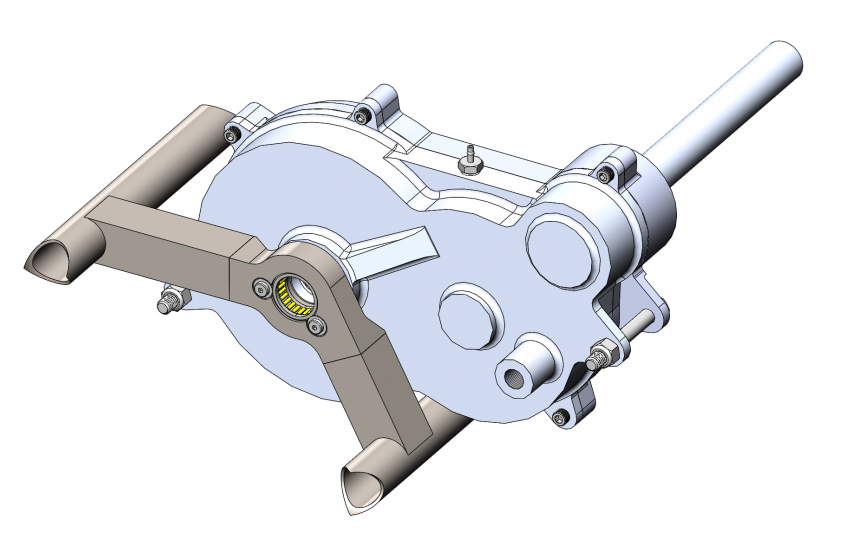
CAD ASSEMBLY
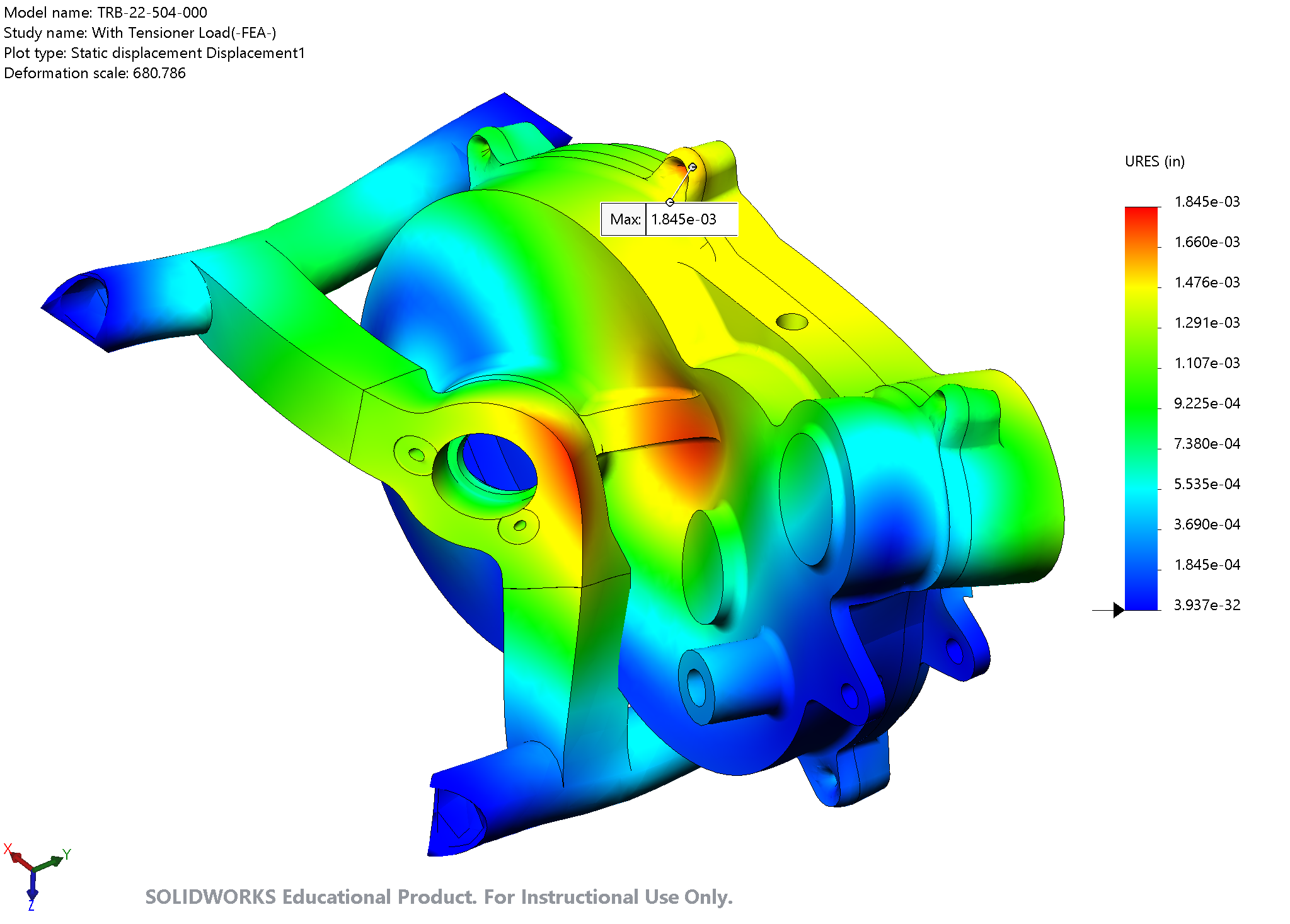
FEA · STRESS UNDER COMBINED LOADING
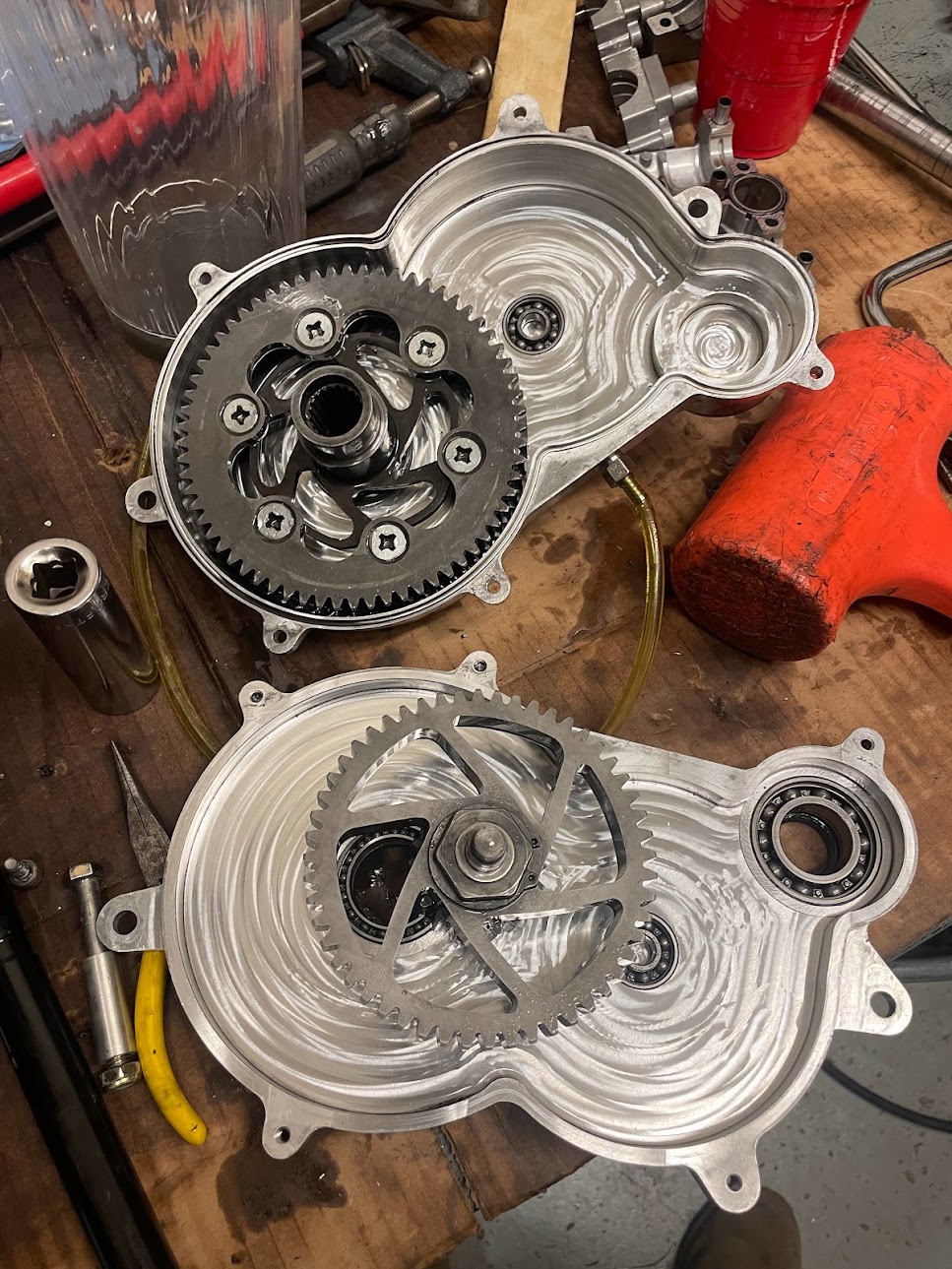
DISASSEMBLED · POST-RACE
The previous Terps Racing gearbox was struggling: bearing wear, oil leakage, and weight overhead were eating performance. The team also wanted a new belt system to drive both the front and rear wheels.
I led a complete redesign with three constraints set by the existing platform: the gearbox mounted to the frame, took power from a CVT input, and had to output to halfshafts (rear) plus a timing pulley (front belt) and an idler pulley to tension that belt.
Three primary loadings shaped the structure: an idler pulley reaction of ~700 lb on the gearcase, a CVT belt tension of ~300 lb on the input shaft, and bearing reactions from gear interactions at every seat.
I optimized the case in SolidWorks FEA against those loads, sized bearings against the new reactions, and rebuilt the manufacturing plan around CNC mill, lathe, hobbing, and EDM operations the team could realistically book.
The gearbox competed in three endurance races, 12 hours of total race time, and survived hours more in testing. Despite minor issues it remained operable through every event. It still runs today on the TR22 chassis used as a test mule.
Three things carried forward into TR23 and later humanoid work: